The sustainable desk setup: buy it once, keep it a decade
The greenest desk accessory is the one you only buy once. Sustainability at a desk has less to do with recycling logos than with materials that age well and gear you never have to replace — here is how to build a workspace that outlasts your laptop.
At a glance
| Product | Best for | Price | Warranty |
|---|---|---|---|
| Nest Monitor Riser with Drawer | Bamboo shelf, hidden storage drawer | € 49.95 | 2 years |
| Muse Felt Desk Mat | Soft, quiet wool-felt surface | € 27.95 | 2 years |
| Walnut Palm Rest | Solid wood, firm contour | € 34.95 | 2 years |
| Arc Single Monitor Arm | Gas-spring, full motion | € 79.95 | 2 years |
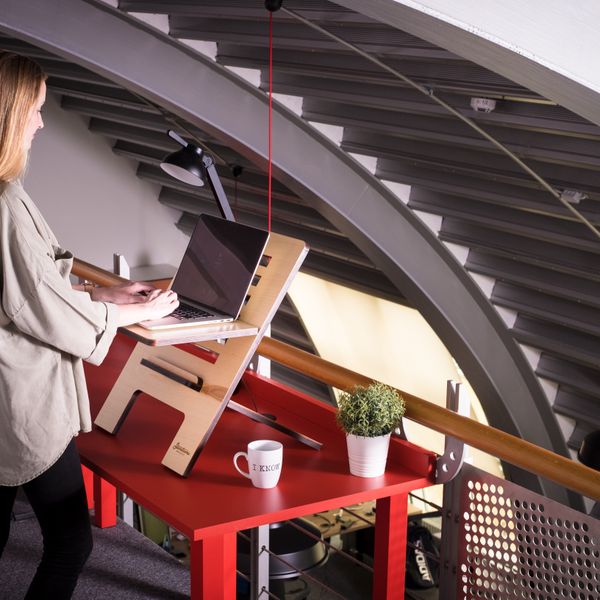
| Pillar Sit-Stand Frame | Add your own top | € 279.95 | 2 years |
| Basin Contoured Keyboard | Concave key wells, thumb clusters | € 179.95 | 2 years |
| Vertical Wireless Mouse | Slim vertical, quiet clicks | € 34.95 | 2 years |
| Zenith Monitor Riser | Bamboo shelf, cable slot | € 59.95 | 2 years |
| Terra Anti-Fatigue Mat | Cushioned, bevelled edge | € 54.95 | 2 years |
What 'sustainable' really means at a desk
The most sustainable purchase is the one you never have to make twice. Most of a desk accessory's environmental cost is front-loaded — the mining, moulding and shipping all happen once, before the thing ever reaches you — so the single biggest lever you hold is buying something that survives a decade rather than eighteen months. A flimsy plastic riser stamped with a recycling logo that cracks and gets binned within two years is worse for the planet than a solid one with no logo at all that outlives three laptops. That reframes the whole exercise. Instead of chasing 'eco' badges, look for three things: materials that age gracefully rather than degrade, construction you can repair instead of replace, and standard fittings so one worn part never condemns the whole object. The rest of this guide is those three principles applied to a real desk, with the specific pieces that hold up to them.
Start with materials that age well
Natural, single-material objects are the easy win, because they wear in rather than out and can be cleaned, refinished or eventually composted instead of shredded into landfill. Bamboo leads for desk surfaces — it is a fast-growing grass rather than a slow hardwood, yet it is stiff enough to carry a monitor without a steel cage. The Nest Monitor Riser with Drawer puts a bamboo shelf at eye-level height and tucks the cable clutter into a drawer underneath, so one honest material does two jobs at once. The same thinking runs across the desk. A wool-felt mat like the Muse Felt Desk Mat is a single natural fibre that quietens the surface, protects it and brushes clean for years, rather than the coated foam pads that peel and flake after a season. A solid Walnut Palm Rest replaces the gel wrist pads that split and leak within a year — hardwood simply does not break down on that timescale, and it develops a patina instead of yellowing. Buy each once and keep it a decade.

Nest Monitor Riser with Drawer
Bamboo shelf, hidden storage drawer

Muse Felt Desk Mat
Soft, quiet wool-felt surface

Walnut Palm Rest
Solid wood, firm contour
Choose repairable, standard-fit gear
The quickest route to landfill is a proprietary part you cannot replace. When a component follows an open standard, a worn or broken piece becomes a cheap swap instead of a reason to throw the whole thing out. A monitor arm is the clearest case: the Arc Single Monitor Arm uses the universal VESA mount, so it fits nearly any screen you own now or buy later, and a single arm quietly outlives the several monitors it will carry across its life. Frames beat fixed furniture for the same reason. A sit-stand base like the Pillar Sit-Stand Frame lets you keep or reuse a desktop you already own and, if the mechanism ever fails, replace only that — not the entire desk. Steel-and-aluminium frames are also genuinely recyclable at true end-of-life, unlike the melamine-over-chipboard slabs of most flat-pack furniture, which cannot be separated back into their materials at all.

Arc Single Monitor Arm
Gas-spring, full motion

Pillar Sit-Stand Frame
Add your own top
Fewer, better inputs beat constant upgrades
A lot of quiet waste hides in the churn of keyboards and mice — cheap peripherals get swapped every couple of years as switches wear out or sealed batteries die. Buying one well-made input you actually like is both the ergonomic and the environmental choice. A contoured board such as the Basin Contoured Keyboard is built to be lived with for years, and keeping your hands neutral means you are far less likely to churn through gear chasing a comfort you could have bought once. A pointing device follows the same rule. A vertical mouse like the Vertical Wireless Mouse holds your forearm in a neutral handshake and is built as a keeper rather than a throwaway. Wherever the option exists, favour replaceable or rechargeable cells over batteries sealed inside the shell, and wired or long-life wireless over devices that die the moment an internal cell does. One considered input, kept for years, beats a drawer full of dead ones.

Basin Contoured Keyboard
Concave key wells, thumb clusters

Vertical Wireless Mouse
Slim vertical, quiet clicks
The quiet-luxury desk, assembled
Pulling it together, a durable desk does not look austere — it usually looks better, because natural materials and honest metal age into the 'quiet luxury' that mass-market plastic only imitates. A solid Zenith Monitor Riser in wood or aluminium sets your screen to height and doubles as a shelf that will still be standing long after a moulded equivalent has gone brittle. Under a standing desk, a cushioned Terra Anti-Fatigue Mat spares your legs and, made from a single resilient layer, holds its shape for years of daily use. None of this asks you to spend more overall — it asks you to spend once. A two-year warranty, which every Deskt product carries, is itself a durability signal: a maker who expects a product to last stands behind it for longer. Build the desk from pieces chosen to be kept, and the most sustainable version of your workspace turns out to be the same as the nicest one to sit at.

Zenith Monitor Riser
Bamboo shelf, cable slot
Terra Anti-Fatigue Mat
Cushioned, bevelled edge
FAQ
Is buying durable gear really greener than buying recycled?
In most cases, yes. The bulk of a desk accessory's footprint comes from making and shipping it, and that happens once. A well-built item you keep for ten years spreads that one-time cost across a decade, whereas a recycled-material product that fails in two years triggers the whole cycle again — packaging, freight and disposal included. Recycled content is a genuine bonus, but longevity is the bigger lever.
What materials last longest at a desk?
Solid hardwoods like walnut, bamboo, wool felt, anodised aluminium and steel all age well — they wear in, can be cleaned or refinished, and are recyclable or compostable at end of life. The materials to be wary of are coated foams, thin plastic and melamine-over-chipboard, which tend to peel, crack or delaminate and cannot easily be separated for recycling.
Does 'sustainable' mean more expensive?
Per year of use, usually the opposite. Durable pieces cost more up front but are bought once rather than every couple of years, so the ten-year cost is often lower than a run of cheap replacements. Standard-fit gear also lets you replace a single worn part instead of the whole object, which saves money as well as waste.
How do I dispose of old desk gear responsibly?
Working items are best passed on — sell or donate them, since reuse beats recycling. For electronics, use a WEEE collection point; most EU retailers and municipal sites accept them free. Separate single-material objects like solid wood or metal go in the right recycling stream, while mixed-material or coated items usually cannot be recycled at all — which is exactly why choosing them in the first place is worth avoiding.